Tuesday, April 18, 2017

Mothers of Wolf Children


    I have never known a parent who said that raising children is anything close to easy. I have never known a single mother that did not look exhausted as she tried to both work and raise her kids. Being a parent is hard, and being a single parent is even harder, but poor Hana had to raise two children who were part wolf and do it in secret. Mamoru Hosoda’s Wolf Children is a moving film of a beautiful and complicated little family that I believe is really geared towards parents. It contains some really great messages and lessons for young parents, especially single parents, who are struggling but filled with so much love for their little monsters. Wolf Children is a fun, but touching, movie about the importance and difficulty of family life, and the pain of growing up.

    Hana is impossible to dislike, and her strength through her exhausting journey is extraordinary. She is a stay at home single mom with little money, no friends, no help, two rambunctious wolf children, and a giant secret to keep from the world, and she does it all with a smile and a laugh. All parents go through remarkably similar things. They can connect with having too little money, too little sleep, being out of their depth, having little adult interaction, and children who are always hungry and making messes. All children can be wolves sometimes, and I feel this film is really just a slightly exaggerated tale of every single mother and family. While we can chuckle in amusement and sympathy seeing Hana doze off every spare second she gets, we also realize through her diligence and dedication that all the hard times are so worth it to her. There is nothing more important to Hana than her family. Nothing. Most families I know will agree that raising happy successful children is the top and only priority of a parent. Seeing the children laugh is all the reward needed. We all go through really hard times, but by remembering why we are doing the things we are, and who we are doing them for, it makes the burden just a little lighter. We will do anything for those that we love.

    All parents want a good future for their beloved children, but it can be hard letting them go in the end. We raise them to be able to live confidently and happily in the world by themselves, to grow into good men and women, but the years always seem to fly by too quickly. After living a difficult life of secrecy in the city for years, Hana decides to move to the countryside with her children to give them more privacy and to give them the chance to decide who they want to be. However, when the time came and Ame chose to leave home and be a lone wolf, Hana is torn apart. Parents raise children for the purpose of them leaving home one day, but when they do, it is so difficult to let them go. It’s painful.

Hana actually reminded me a bit of my own mother. Once, my mother broke down in front of me when she thought of her youngest child leaving home in just a few years. She lamented that being a mother was her whole life and purpose, and when we had all left, what would her purpose be in life? With Ame living in the forest and Yuki gone to boarding school, there is a final scene with Hana just sitting alone in the dining room. She is still so young and has gone through so much, but now what was her purpose? It broke my heart a little.

Wolf Children helped me to understand the feelings and purpose of a parent so much better, as it slightly exaggerated the trials and reactions of a single parent. It is a hard life to raise two wild little pups by yourself, but the hard times make the joys that much greater. Little things like new books, new skills, fresh snow, and kind neighbors are treasured so much more. The fulfillment of a parent’s purpose is bittersweet. It is heartrending to let them go, but every time Hana hears her son howl out in the wilderness, she smiles. They are gone, but they are where they are meant to be. This movie is a wonderful, meaningful family film that teaches what it means to be a mother.

Monday, April 17, 2017

Remembering Our Worth


    I have loved C. S. Lewis’s The Chronicles of Narnia since I was in elementary school, and I was thrilled to see that I would be able to read one of them for homework and write a paper analyzing the spiritual nature of the most popular book in the series. Watching the movie, it can be difficult to see the spiritual messages that make up the entire series unless you are looking for them. That is near impossible when reading the books. The Chronicles of Narnia are saturated with the Christian stories and believes, and they make the tale glow with depth and wonder. The Lion, The Witch, and The Wardrobe is the most well-known book in the series and teaches of the divine nature of man, of the redemption of sinners, of the Resurrection, and the importance of applying this knowledge to real life.

    The moment that Peter, Susan, Edmund, and Lucy enter Narnia, they are heralded as royalty, heirs foretold to the thrones. Their very presence is seen as hope to the faithful and a threat to the wicked queen. They are inherently royal, and this points to the royal inheritance that awaits all men and women. We are all “sons of Adam and daughters of Eve,” and if we are faithful to Jesus Christ, represented by Aslan, we will be crowned kings and queens. We are children of God, heirs to a throne, and once we recognize this fact, fight for the Savior and freedom from sin, and are crowned victorious by the Savior himself, we will forever rule in heaven. “Once a king or queen of Narnia, always a king or queen (94).” We all have come to this land with divine potential and we sometimes we are the only ones who fail to understand. Satan, represented by the White Witch, is certainly not going to wait until we are headed towards Aslan until he reaches out to tempt us and seek to block our way forward.

    The most spiritually important moment in all seven books is depicted in The Lion, the Witch, and the Wardrobe, when Edmund falls to temptation and Aslan gives his life to save him. There is no more vital moment in the history of the world than the Atonement of Jesus Christ for our sins, and there is no better fictional representation than Aslan walking willingly into the cruel arms of the Witch and her hosts to redeem one precious soul. Edmund sinned, he betrayed everyone, but he was repentant. This is a lesson that no sin is too awful, so failure too great, no flaw too big, that cannot be redeemed. Aslan, like Christ, gave himself willingly as sacrifice for us. He was bound. He was mocked. He was surrounded by creatures “kicking him, hitting him, spitting at him” (181). He died. And yet he lived again, more glorious than before. C. S. Lewis really brings the point home and makes the reader think at the end of the story. When Lucy asks Susan if Edmund should be told what Aslan had done for him, Susan replies, “It would be too awful for him. Think how you’d feel if you were he” (193). How do we feel about all the Savior did for us?

    The readers really follow and identify with the Pevensie children, and after they, and the readers with them, have this glorious adventure and learn of Aslan and of their own worth, they have to return home to the real world. Lewis is teaching the readers that these wonders they have just learned are not just in some far off magic land, but they are to be carried through after the wardrobe is closed and the book is put away. While the world might not believe them or recognize the royal divine worth of the readers, just like the Pevensie children, they must always keep in their minds and hearts that “once a King in Narnia, always a King in Narnia” (196). We must always remember who we are and what the Savior has done for us.
 
    It can be difficult to comprehend all that we are and all that Jesus Christ has done for us. It can feel impossible to comprehend the whole picture of the Plan of Salvation. The Chronicles of Narnia are wonderful tools to help young minds, and old minds, learn and remember in a fun way. The Lion, the Witch, and the Wardrobe is a compelling and wonderfully spiritual story that teaches the value of each human life, the importance of the Atonement in redemption and resurrection, and the principle to applying this knowledge to normal life.

Fireside Chat - Benifits of Violent Media

    When asked what I believe in, I can easily rattle off a long long list, and would be able to talk about each and every point on that list at long length. However, for this final project I wanted to talk about a belief that might make me different than the rest of the class. I wanted to make people think. I believe in the afterlife, in the importance of families, in equality among all people, but that wouldn't make me stand out. It was after a long debate I had with my husband two weeks ago about what he had learned in a forum that I realized my feelings about violent media. I truly believe that some violence and conflict in media can be extremely beneficial for mentally preparing the audience for bad situations they might encounter in life.

    After watching violent media, it is common for me to place myself in those situations and mentally go over what I would do if faced with that. Even though I don’t expect to be attacked my monsters, I showed the Doctor Who clip to demonstrate a scene that made me realize the dangers of not reacting well to a bad situation. By mentally walking through bad situations, we can train our brain to be able to handle the shock of being in danger. As Dr. Brad J Bushman spoke of in his forum at BYU in 2014, being exposed to violent media reduces the shock of violence in real life. I don’t think just watching violent media on TV will turn us into cool, calm, experts and Kung fu masters, but I do believe it has a good probability of helping you not freeze and panic. If my house is broken into or if a man pulls a gun on me in a parking lot, I want to be able to think and act.

    I also believe that violent media can spark a lot of good “what if” questions with family. What do we want to decided to do as a family in case we come home from school and the door to our house is ajar? I used the White Collar clip to show a scene where the character had walked through a “what if” situation with her husband and had reacted well, and it was a scene that also inspired conversation of the same sort with my husband.

 I framed my Fireside Chat after the manner of a Ted Talk, rather like the “danger of a Single Story” that we watched for class. They are interesting, make you look internally, and inspire great questions. That is exactly what I wanted my audience to leave with after my presentation, as well as stating to think more critically about what they watched for media.

Monday, April 10, 2017

Concerned Citizen - Liam Isaac

    It is quite common for the best people, for those that make the biggest differences in the lives of individuals and communities, to go unnoticed. Even more so when the individuals work with those who are shamed by the community and wish to be anonymous. Their stories often go untold. Some of those great heroic individuals are those who serve in the Addiction Recovery Program. Brother and Sister Fiefield have served those with addiction and the loved ones of those with addiction, for years unrecognized. Hours and hours every week are spent comforting and giving hope to those in need, both in their family and in the community. They have been a support to hundreds over the years, and yet in their humility, don’t see themselves as having that big and impact.

<iframe width="100%" height="450" scrolling="no" frameborder="no" src="https://w.soundcloud.com/player/?url=https%3A//api.soundcloud.com/tracks/317195443&amp;auto_play=false&amp;hide_related=false&amp;show_comments=true&amp;show_user=true&amp;show_reposts=false&amp;visual=true"></iframe>

    We chose to document the Fiefields using audio rather than video to capture the anonymous nature of their service as well as the humility of their personalities. Those they serve are often unknown and invisible in the community, but the impact they have is huge in shaping that community. The “ripple effect,” as they called it, is what makes the biggest impact in a community. They fear that shame of what addicts do are causing them to isolate themselves from the community, and they hope to help the addicts overcome that and renter the community with confidence. As Goldbard stated: “The antidote...is a culture that prizes connection and creativity.” The strive to reconnect those who have lost connection through growing confidence through honesty and anonymity. We harnessed the audio to help represent that.
    We were also greatly inspired by the videos shown in class of LDS women sharing their personal stories. While we didn’t introduce and close our video with ourselves, we found the style of the absence of the interviewer during the actual story to be quite powerful. With the Fiefield’s speaking directly to the audience, it makes the story more personal and powerful. Even though the couple was reluctant to talk about themselves and give themselves credit, their strength and impact can still come across. As in the Mormon Message “Abide with Me,” they don’t have to boast of themselves, or even be seen as the main characters, for their strength and importance to the community to be obvious to the audience.
    Those enslaved to addiction are often seen as the lowest of the low in modern communities, yet the Fiefield’s are there offering love, support, and hope. They work to bring freedom and friendships to those who have lost everything. They help mend hearts and give strength to try again. And they do it all without drawing attention to themselves. There could be no better people to focus on then them, and no better way to document it than a faceless, yet personal, story.
 

Tuesday, April 4, 2017

Speed Racer

    That was the best movie for children I have ever seen. If that can’t hold a little kid’s attention, I don’t know what would. Bright and vivid colors, constant movement, epic race cars, explosions, awesome transitions, a chimpanzee for a brother, and a perfectly horrible villain make the two hour long movie a gripping tale from start to finish. There is no way I could walk away, and I would be shocked if even my energy-filled-4-year-old nephew wouldn’t watch the entire thing in awe. However, in Speed Racer, there were many things that I noticed and subtle messages that stuck out to me that a child might not, at least consciously, realize.
    There is a strong message about the importance of family. It was forgetting that which lead to the problems in the beginning of the movie, as the eldest son left home. It was remembering the importance of family that healed the cracks years later, when the second son, Speed, was going to leave home. Family is more important than money, more important than a business, more important than fame. What a great principle to teach to the children who are watching this.
    There is also a strong underlying message about the dangers of politics and “Big Brother.” The villain is a wealthy, seemingly kind and generous, businessman. He owns a giant corporation and is offering the benefits of it all in return for Speed giving up his ideals, honesty, and faith in the world. Mr. Royalton controls everything without anyone knowing it. The races are rigged, the companies control all the resources. According to Mr Royalton, everything in life is controlled by companies and it is all about the money and the economy. That is what truly matters. Using the games and the public through these is what everything is really about. Is this making a statement about our sports and our big corporations and controlling government?
    Staying true to yourself and finding your purpose for living and fighting is the true meaning of life, according to Speed Racer. That is how success is really found and how true happiness is achieved. Mr Royalton had everything he could have wanted and dreamed of, yet always wanted more and always seemed to be on the edge of anger and a temper tantrum. Speed lived a decent life, but he had a family, his morals, and his dream, and he was at peace as long as he stayed true to those. To doing what he knew he should and what was right. The true win at the end of the movie was not the race, but the battle inside himself as he tried to reconcile who he was and what the world was. In finding himself, he was able to come off conqueror.
    Speed Racer was filled with great messages and lessons for the viewers. Honesty, family, the purpose of life, the dangers of big business and big government. I might not have noticed these, or noticed that I noticed, as a kid, but they definitely had an impact on me as an adult. It was wonderful.

Tuesday, March 28, 2017

Play - An Escape From Adult Life


    I have always loved to play, and when I was younger, I played constantly. I brought a book with me everywhere, and would even read walking I between classes. I loved coming home and playing with my older brother with blocks, Legos, cars, stick “swords,” video games, plastic hangers, or just our imaginations. Some of my favorite memories of growing up were when he would build Lego racetracks, planes, and forts, and then I would tell the story of what was going on. We could play like that for hours everyday. Now as an adult, playing Lego Star Wars brings me back to those times, and is not just an escape from the stresses of adult life, but are also a nostalgic reminder of earlier days of creativity and family bonding.

    For children, play can be a way to pretend to be grown ups and to be in charge, but for adults, it can be a way to go back to the simpler days of childhood. After dealing with school, work, spouses, children, and finances, it is such a relief to sit down and play Disney Kingdoms or Lego Star Wars. It is so nice to forget stress and responsibilities for an hour or so and just play. It gives us a feeling of being strong and in control, just like it did when we were little. Playing gives us a chance to escape the consequences of real life, knowing that if we fall off the ledge fighting Darth Maul we will just pop back up a second or two later. If gives us a release to vent frustrations, and shoot every droid, box, flowerpot and window that we can. Everything in a game is a release and feels like a return to more stress-free, simpler times. Games are an escape.

    While there are “adult” games, I love playing the games I played when I was younger, because it always reminds me of my brother. We loved to play Lego Star Wars together. We grew up with a GameCube, and often played on the weekends and evenings. Even when there were one player games like Legend of Zelda or Portal, I would sit next to him and we would talk and laugh, or sometimes just sit next to each other. I loved the games for the main reason of spending time with him. They were a way to bond. Playing Lego Star Wars really reminded me of those times. Andrew always loved playing as General Grievous. He lives in Idaho with his wife now, and I see him a couple times a year. Playing reminds me of the days we were close.

    Playing Lego Star Wars reminded me how much playing effects how creative I am. Growing up and playing everyday, I was always writing little stories or acting out adventures for my toys. After starting college, I have had much less time to play or read, and coming up with ideas for papers and projects has been difficult and stressful at times. I believe that playing loosens up the mind and allows thoughts and ideas to form and wander without being beaten back by a list of things that need to be done. I have time to imagine and the stories in the game are invitations to form my own stories and alternate realities around them. My creative brain can venture out and stretch; it is being fed wonders and has room to romp around for a bit. There is nothing quite like having a Wookie wander around Jaba’s hut with a Stormtrooper helmet perched skewed on his head and wearing a mustache and glasses disguise to get the creative juices flowing.

    I really really hate stress, but as an adult there is no way to avoid it. Life happens and, more often not, it doesn’t happen the way you want or expect it to. Play remains a way for us to escape and relax. It gives us a chance to breathe, put aside our worries for a time, and laugh. Play, like in Lego Star Wars, allows us to defy the rules and demands of reality, and play with little worry of the consequences of our actions. Games remind us of our youth and bring a feeling of nostalgia. They let us easily connect and bond with those we play with, or remind us of those that we used to play with. Video games and Legos will always remind me of Andrew and the days when he was my best friend. Playing stimulates our brains and provides the creativity I need for school and work. Honestly, I believe that we don’t appreciate games enough for all they do for us. Taking time to play is what gives me the strength to keep going in this stressful life.

Fear of Diversity Creates Witches


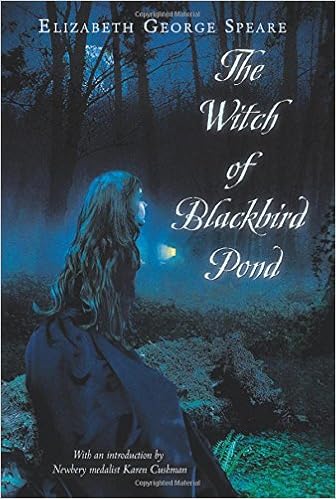
    The early 1700s in America were full of witch trials, of which the witch trials in Salem are the most well known. These witch trials didn’t come because of sorcery or black magic, but because of spite against, and fear of, anything different or unknown. Humans are generally content with their view on and understanding of life, and anything different or new is resisted. Difference is scary. Difference is a threat to the current way of life or way of thinking. Elizabeth George Speare’s book, The Witch of Blackbird Pond, highlights the dangers of the lack of diversity and how it can lead to stagnation, and the creation of false witches.

    A lack of diversity results in an individual, or a population, growing very comfortable in their limited point of view and standard way of living. Provo is such a place. Little Rock, Arkansas was such a place. And in this story, Wethersfield, Connecticut was such a place. It was a small town of Puritans, separated by a good distance from any other towns and foreigners were very rare. The most diversity they have is in the form of Hannah Tupper, the only Quaker in town. Even this small difference is shunned, and Hannah is feared and hated. Children are warned away from this little old lady for fear her oddness could spread. This tiny town, so uniform and strict in its ways, was wholly unprepared for a bold, freethinking, foreigner to enter its borders.

    Because differences were not welcome in that town, nothing really changed. There wasn’t much growth. New ideas lead to improvement and growth, but because new ideas were looked down on, that growth couldn’t happen. John Holbrook personifies this stagnated progression. Although he is intelligent and open, he is convinced that everything that his new teacher says is doctrine. He stops thinking for himself and tries to make himself just like his teacher. Growth can happen and did, but only to a certain point. No one can advance further than their teacher or parent if they never try anything new. John, and the entire town was stagnate without diversity in view and action to drive them to new heights.
    The town’s hatred of difference was not only oppressive and halting, but their resistance to diversity became dangerous. When new ideas and behaviors were introduced, they were greeted with hostility. Her ability to swim and disobedience to town culture ended up getting Kat labeled as a witch by those who hated her. She was nearly killed just because she was different. We see that in the real world, as those different than us are persecuted. Blacks, Hispanics, Asians, homosexuals, women, and Muslims, just to name a few, are different than the majority of Americans and are stereotyped, mocked, feared, and are sometimes seen as so different that others don’t even try to understand them. They are more likely to be arrested, evicted, fired, mistrusted, or shot out of fear. The fear of the small town in The Witch of Blackbird Pond turned their distrust into anger and turned difference into witchcraft. Kat was lucky to have a more fair judge at her trial, and friends who showed everyone that different did not have to be a sin.

    It is not until difference is accepted that change and progression can occur. A teacher that gives strict guidelines and docks points for straying will not be able to help that student progress beyond those limiting guidelines. A government that restricts immigration, mingling of races, or publishing of ideas, restricts the citizens growth. This town of Wethersfield restricted new teaching styles, plays, books other than the Bible, different cultures and religions, and levied a fine for not going to church every Sunday. If everyone was the same, their way of life would be safe. But as John Bytheway said, “A ship in the harbor is safe, but that is not what ships are made for.” Growth and progression are not always easy, fun, or painless, but they are what humans need to be really happy. It was only after Kit had been proven by a court of law to not be a witch, and was only trying to help teach a girl to read, that Wethersfield came to accept her a little more. They were a little more open to diversity, and small concessions towards growth were made.

    Diversity opens the mind to new ideas, cultures, and possibilities, but the change to get there is hard. The Witch of Blackbird Pond demonstrated the fear, dangers and stagnating consequences that come with a lack of diversity, and showed a slight softening towards differences in the end. However, it is still an issue we have today. We are trying to change and be more open to differences, but it is a continual fight and change is slow. But, as seen in this book, the rejection of diversity is dangerous for our growth and for those who are different. Our fear turns differences into witches.