Tuesday, March 28, 2017

Play - An Escape From Adult Life


    I have always loved to play, and when I was younger, I played constantly. I brought a book with me everywhere, and would even read walking I between classes. I loved coming home and playing with my older brother with blocks, Legos, cars, stick “swords,” video games, plastic hangers, or just our imaginations. Some of my favorite memories of growing up were when he would build Lego racetracks, planes, and forts, and then I would tell the story of what was going on. We could play like that for hours everyday. Now as an adult, playing Lego Star Wars brings me back to those times, and is not just an escape from the stresses of adult life, but are also a nostalgic reminder of earlier days of creativity and family bonding.

    For children, play can be a way to pretend to be grown ups and to be in charge, but for adults, it can be a way to go back to the simpler days of childhood. After dealing with school, work, spouses, children, and finances, it is such a relief to sit down and play Disney Kingdoms or Lego Star Wars. It is so nice to forget stress and responsibilities for an hour or so and just play. It gives us a feeling of being strong and in control, just like it did when we were little. Playing gives us a chance to escape the consequences of real life, knowing that if we fall off the ledge fighting Darth Maul we will just pop back up a second or two later. If gives us a release to vent frustrations, and shoot every droid, box, flowerpot and window that we can. Everything in a game is a release and feels like a return to more stress-free, simpler times. Games are an escape.

    While there are “adult” games, I love playing the games I played when I was younger, because it always reminds me of my brother. We loved to play Lego Star Wars together. We grew up with a GameCube, and often played on the weekends and evenings. Even when there were one player games like Legend of Zelda or Portal, I would sit next to him and we would talk and laugh, or sometimes just sit next to each other. I loved the games for the main reason of spending time with him. They were a way to bond. Playing Lego Star Wars really reminded me of those times. Andrew always loved playing as General Grievous. He lives in Idaho with his wife now, and I see him a couple times a year. Playing reminds me of the days we were close.

    Playing Lego Star Wars reminded me how much playing effects how creative I am. Growing up and playing everyday, I was always writing little stories or acting out adventures for my toys. After starting college, I have had much less time to play or read, and coming up with ideas for papers and projects has been difficult and stressful at times. I believe that playing loosens up the mind and allows thoughts and ideas to form and wander without being beaten back by a list of things that need to be done. I have time to imagine and the stories in the game are invitations to form my own stories and alternate realities around them. My creative brain can venture out and stretch; it is being fed wonders and has room to romp around for a bit. There is nothing quite like having a Wookie wander around Jaba’s hut with a Stormtrooper helmet perched skewed on his head and wearing a mustache and glasses disguise to get the creative juices flowing.

    I really really hate stress, but as an adult there is no way to avoid it. Life happens and, more often not, it doesn’t happen the way you want or expect it to. Play remains a way for us to escape and relax. It gives us a chance to breathe, put aside our worries for a time, and laugh. Play, like in Lego Star Wars, allows us to defy the rules and demands of reality, and play with little worry of the consequences of our actions. Games remind us of our youth and bring a feeling of nostalgia. They let us easily connect and bond with those we play with, or remind us of those that we used to play with. Video games and Legos will always remind me of Andrew and the days when he was my best friend. Playing stimulates our brains and provides the creativity I need for school and work. Honestly, I believe that we don’t appreciate games enough for all they do for us. Taking time to play is what gives me the strength to keep going in this stressful life.

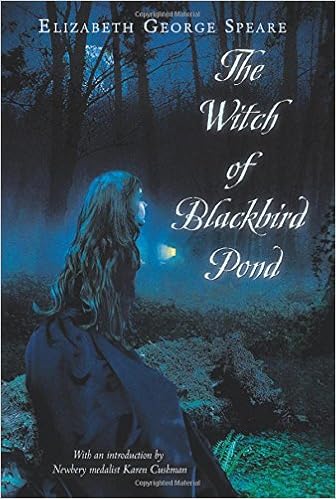
Fear of Diversity Creates Witches


    The early 1700s in America were full of witch trials, of which the witch trials in Salem are the most well known. These witch trials didn’t come because of sorcery or black magic, but because of spite against, and fear of, anything different or unknown. Humans are generally content with their view on and understanding of life, and anything different or new is resisted. Difference is scary. Difference is a threat to the current way of life or way of thinking. Elizabeth George Speare’s book, The Witch of Blackbird Pond, highlights the dangers of the lack of diversity and how it can lead to stagnation, and the creation of false witches.

    A lack of diversity results in an individual, or a population, growing very comfortable in their limited point of view and standard way of living. Provo is such a place. Little Rock, Arkansas was such a place. And in this story, Wethersfield, Connecticut was such a place. It was a small town of Puritans, separated by a good distance from any other towns and foreigners were very rare. The most diversity they have is in the form of Hannah Tupper, the only Quaker in town. Even this small difference is shunned, and Hannah is feared and hated. Children are warned away from this little old lady for fear her oddness could spread. This tiny town, so uniform and strict in its ways, was wholly unprepared for a bold, freethinking, foreigner to enter its borders.

    Because differences were not welcome in that town, nothing really changed. There wasn’t much growth. New ideas lead to improvement and growth, but because new ideas were looked down on, that growth couldn’t happen. John Holbrook personifies this stagnated progression. Although he is intelligent and open, he is convinced that everything that his new teacher says is doctrine. He stops thinking for himself and tries to make himself just like his teacher. Growth can happen and did, but only to a certain point. No one can advance further than their teacher or parent if they never try anything new. John, and the entire town was stagnate without diversity in view and action to drive them to new heights.
    The town’s hatred of difference was not only oppressive and halting, but their resistance to diversity became dangerous. When new ideas and behaviors were introduced, they were greeted with hostility. Her ability to swim and disobedience to town culture ended up getting Kat labeled as a witch by those who hated her. She was nearly killed just because she was different. We see that in the real world, as those different than us are persecuted. Blacks, Hispanics, Asians, homosexuals, women, and Muslims, just to name a few, are different than the majority of Americans and are stereotyped, mocked, feared, and are sometimes seen as so different that others don’t even try to understand them. They are more likely to be arrested, evicted, fired, mistrusted, or shot out of fear. The fear of the small town in The Witch of Blackbird Pond turned their distrust into anger and turned difference into witchcraft. Kat was lucky to have a more fair judge at her trial, and friends who showed everyone that different did not have to be a sin.

    It is not until difference is accepted that change and progression can occur. A teacher that gives strict guidelines and docks points for straying will not be able to help that student progress beyond those limiting guidelines. A government that restricts immigration, mingling of races, or publishing of ideas, restricts the citizens growth. This town of Wethersfield restricted new teaching styles, plays, books other than the Bible, different cultures and religions, and levied a fine for not going to church every Sunday. If everyone was the same, their way of life would be safe. But as John Bytheway said, “A ship in the harbor is safe, but that is not what ships are made for.” Growth and progression are not always easy, fun, or painless, but they are what humans need to be really happy. It was only after Kit had been proven by a court of law to not be a witch, and was only trying to help teach a girl to read, that Wethersfield came to accept her a little more. They were a little more open to diversity, and small concessions towards growth were made.

    Diversity opens the mind to new ideas, cultures, and possibilities, but the change to get there is hard. The Witch of Blackbird Pond demonstrated the fear, dangers and stagnating consequences that come with a lack of diversity, and showed a slight softening towards differences in the end. However, it is still an issue we have today. We are trying to change and be more open to differences, but it is a continual fight and change is slow. But, as seen in this book, the rejection of diversity is dangerous for our growth and for those who are different. Our fear turns differences into witches.

Monday, March 20, 2017

World Building - Christine, Alicia, Rick, and Cristin


   We’re not sure how it worked out this way, but the males in every species but humans seem to be the appearance conscientious ones. It is the males that wear the bright colors, that draw the eye. It is the males who strut about and fluff their stuff. They fight to be noticed by the females and establish their strength and dominance. Females, on the other hand, tend to be more drab, small, and dull in color and appearance. They just kind of blend in. In mating season, they are the ones who simply sit and wait to be impressed before they make their choice. What if humans operated the same way?

    We decided to make such a society. We were very inspired by the award-winning documentary series, Planet Earth, and this scene of bird mating rituals where males dance and perform to win over their female counterparts.  https://www.youtube.com/watch?v=W7QZnwKqopo

    The brighter and more colorful, the better. Men want to stand out, to draw the eyes of prospective mates/wives. “Matching” is not an issue. “Clashing” colors and styles are better at standing out. Makeup is worn by the men rather than the women. While courting, men do their best to appear strong, big, colorful, quick, and bright. Occasionally, more than one man may fight for a female's attention.

    This world, in a way, mocks the culture of our current world. In politics, in many cases, the public judges political candidates based more off of appearance than capability, experience, or their ideas. We judge people on the street by what they wear and how they walk. Jobs are often given to the best dressed and best looking applicant. In dating, the men and women sought after tend to be the “hot” ones, the “sexy” ones and the “cool” ones. Potential girlfriends and boyfriends are first judged on what they look like, how outgoing they are, and how confident they are. This created world just amplifies those characteristics and flips a lot of the traits from women onto men.

    Our world today is based around the approval of others. We live on Facebook and SnapChat and are always worrying about if we will fit in. Looks, whether real or not, is what many strive for. This world we created points out these characteristics in our world and exaggerates them. The absurdity of it all makes us laugh, and also wonder if appearances are really that important to us, or if they shouldn’t be. Just as we talked about in class, society forms media, but media also affects society. Seeing such characteristics in such a ridiculous way might make people evaluate what we want to base our opinions on in the future.


Future Mating Instruction Pamphlet

The Makeup

For mating purposes, males are required to wear a face full of colorful makeup that with enhance their image. All males are subject to finding the colors that best shows of their skin complexion. At age 18, males are encouraged to attend a makeup convention that will help them learn about contouring in the effort to helping them focus on enhancing their image.


 Females on the other hand are highly encouraged to wear no makeup and maintain a clean basic appearance. Their training is based on their inner self. They develop solid attributes of intelligence,good judgment, and selectivity.


The Clothing


Males have a responsibility to find clothing that is colorful and fitting to their personality. It is a requirement for all men at the age of 18 to attend a colorizing clothing center where they can experience various backdrops and dimensional modes in order to find their most attractive and enhancing colors.


The formal look is reserved for when males are at the final battle line of competing against another male for one particular mate.


The casual look on the other hand should be worn throughout the season until finding a mate that is remotely interested.


Because females are attracted to vibrant colors and elegance, men have the responsibility to prepare their attire before mating season that will elevate their chances of finding a mate.


Women are only allowed to wear loose clothing that isn't remotely flashy. Only skin tone clothing is allowed because females should blend into the environment. They are the base motivators of society. Henceforth their appearance should be fortifying.


Mating Season Calendar


The mating season only last three months. So starting from May-July men need to be on the lookout for potential mates. The first round of mating occurs from the 13th of May to the 20th. The second round of mating last from the 11th of June till the 18th. The last round occurs from the 10th of July until the 17th of July. Those who are unsuccessful in finding a mate within that time period must wait an entire year.

Diversity is the Key to Progression

There are some stories that leave a real mark, that make you think, and it takes a while to shake off those feelings that they leave. Whale Rider is that kind of movie. I had never thought about diversity meaning anything other than race before, but watching this movie really made me realize that diversity is so much more than that and can leave a large detrimental mark if ignored or spurned. Diversity covers a large array of ideas, culture, ethnicity, gender, personality, and status. Whale Rider calls the viewer's attention to the issues that come from a lack of diversity in gender and gender equality.

 Living without being exposed to diversity in any of these forms can be dangerous. Without diversity, humans are resistant to change. Without difference, it is easy to think that we are always right and our way is the best and only way to do anything. Minds are closed, and growth is stunted. Moro, in Whale Rider, is a traditionalist, and believes any change in tradition is evil, and thus almost loses his tribe, his granddaughter, and his mind. In his world, men ruled and women were to keep out of their way.

It was very clear that gender was the inhibiting factor in the progression of this tribe. The characters were nearly all native New Zealanders. They all shared the same skin color, the same religion, and the same culture. Besides Moro’s son, they all stayed in the area and followed the same leader and followed the same teachings. It was a great lack of females that was apparent throughout the film, and the demeaning of female opinions, ambitions, and status. Moro believed that it is a woman’s job to bear sons. This is made apparent in the beginning when Moro tells his recently widowed son to move on and try to have a son with someone else, and when Paikea tells off the older women for smoking because it would ruin their childbearing abilities. Moro is so close minded that he refuses the diversity that women ideas and strengths could bring, and refuses the idea that a girl could be the next great chief.

Jerk. Stubborn, blind, fool. It took his granddaughter Paikea actually riding a great whale before he realized all that she was.

I realize that there is value, great value, in heritage and history. There is great importance in culture and tradition. But unless there is change, there will never be progression. Limitations of the past do not have to tie down the present generation. Men and women have different ideas, different ways of doing things, different strengths and weaknesses, and men and women need each other in order to grow.

 Differences and diversity make us stronger. By mingling with different countries, our country has a stronger defense. By learning from different cultures, we can discover truths that would have been forever hidden from us. Technology can advance, medicines can be improved, creativity can explode, knowledge can spread. Diversity makes up our world, and we need everyone in order to better understand it, each other, and ourselves.

It wasn’t until Paikea was accepted as both a girl and as a leader that the tribe was able to come together. It was the accepting of the gender diversity in equal worth that everyone from tribal elder to rebellious son to town lazy drunks could come together with pride and row together in unity. Whale Rider truly shows that acceptance, open minds, and diversity can create progression and harmony.

Tuesday, March 14, 2017

How Play Creates Adults

Growing up, my father’s job caused us to move about every two or three years. I was constantly the “new girl,” and knew that all of my friends were temporary. They might promise to stay in touch, but no one ever does. My best friends were the only things that were constant in my life: my siblings, my books, and my imagination. And even my siblings we not always fun to play with; my older brother always wanted to prove himself. For me, play was a way for me to convince myself that I was strong and I could support myself. Whether I was surviving in the wilderness, fighting monsters ten feet tall, or transforming into wolves, horses, or hawks, I was powerful and free. Constantly moving around, on top of being picked on by my brother, my life as a kid was completely out of my control. Play, whether in books, video games, or the realm of imagination, was my way of establishing control and stability.

Books were my constant companion growing up. I was never without one, and entering the worlds contained within, and “living and playing” in those worlds, was my favorite past time. In them, I became someone else, someone better. From them, I learned history, chivalry, horror, and what is important. They were my friends, my escape, my strength,and my teachers. My books were a stable and unchanging part of my growing up life, and my best playmates.


Play also gave me a way to feel strong and powerful. When playing with my siblings or my school friends, I was always the one in charge. I was the one that told the stories and would decide what was “allowed” or not. I felt very grown up. As we discussed in class, during play we would break “rules” of the real world and play with magic, secret hideouts, and secret codes, yet at the same time there were rules within our world of play, and I was in charge of those rules. That has actually stayed with me as I grew up. I love watching movies and shows, but in order for me to be able to really get into them enough to mentally “play’ with them, they have to be believable and follow the rules of the world they are in. I can suspend my disbelief, but only if what is going on is logical in it’s own world. Sorry, Battle of the Five Armies, but your last battle scene was poorly done.


Play is necessary for children, in their growth of imagination, ability to interact with others, and developement of who they are. Playing at the end of class made me realize how that play allowed us to make friends more easily, talk more easily, and naturally and easily interact with others we know very little. How we play as children influences our futures. I played primarily with my imagination, and I grew up to tell stories, lead others, and go into film. My brother played with logos, blocks, and video games, and he grew up to be very analytical and builds complex computer programs. We are who we are because of how we played.

Webspinna Battle - Nature vs Tech (with Will)


We have both always been fascinated by the power of elements and nature. Especially children, there’s something inherently fascinating about the idea of controlling the water in the shower we or magically sending ourselves a nice breeze on an especially hot day. Various series, from Avatar: The Last Airbender to Pokemon, explore this fantasy and fueled our imaginations while growing up. However, over time, technology has begun to dominate our world. We would rather die than be without phones and laptops. Even today’s pop culture seems much more interested in aliens and androids than elemental monks and pyrokinesis. Gone went the innocent fantasy of our childhood, and in came more realistic representations of “the not too distant future”. For our Webspinna Battle, we decided to explore this dichotomy by staging a battle between technology and nature.
          This battle is one that has been staged many times in various media. Pocahontas, Avatar, Avatar: The Last Airbender, The Last Samurai, Dances with Wolves, and even Ferngully: The Last Forest, tell stories of small groups of rebels who are in touch with nature as they are fighting insensitive high-tech armies. We ended up using a couple of these examples to represent nature’s side in our battle. However, we also thought about the fight in a rather logical way: Who really would win? Who would fight for nature’s side, who would fight for technology? Through this process, we concluded that Smaug and the general power of fire—and death—would obviously be on nature’s side, as well as every animal ever, hence the stampede that was used. For the natural musical cues, we used cheery music dominated by wind instruments, which goes in line with the element of wind.
          For technology, it was a bit easier to decide on different clips to use because all forms of modern—or futuristic—weapons fall under the bracket of technology. Robots, laser guns, normal guns, and even cars are all important modern inventions that have replaced more natural traditions. For technology’s musical cues we used electronic music and rock, with the much louder, manufactured sounds of those genres working against the lighter music that was used with nature. Ultimately, in life, the battle between technology is not one of either/or: Just because we have an iPhone doesn’t mean we can’t enjoy hiking. To represent this, we decided to end on a happier note, with the side of technology learning a bit of humanity and then helping out nature by making its dreams of dinosaurs returning into a reality through the magic of Jurassic Park.
The planning of our Webspinna Battle was an interesting one because we were forced to work within the limitations of clips and samples from pre-existing media we were familiar with. As we discussed in class, these limitations provided us with more opportunities to be creative as we found different media to represent our battle’s combatants. Even technical glitches from the live performance can be seen as, in the words of Bob Ross, “happy accidents”, as we were forced to personally battle against the frustrations of technology while also having to act out the rest of the battle. With these “accidents,”  as well as the * “plagiarized” clips we had planned and used, we were able to tell create something new and awesome, tell our own story and unite opposite forces. Not bad, if I may say so myself.

*From The Escasy of Influence: A Plagiarism by Lethem

Tuesday, March 7, 2017

Willy Wonka - An Experiement in Consequences


Everyone has heard of Willy Wonka. There is the actual candy company, the multiple movie versions, the video game, and, of course, there is the classic book that everything started with, written by Roald Dahl. It is the story of a good young boy in extremely poor circumstances that is raised to a height that only in his wildest of dreams could he have even begun to imagine; A tale full of chocolate, sweets, luck, wittiness, humor, Oompa Loompas, and a rise to greatness for one who needs it most. What more could a child want? Roald Dahl was very creative with his characters, and emphasized the traits of the children, parents, grandparents, and Willy Wonka himself in order to teach a point to his readers. Every room in Wonka’s factory was strange and clever, demonstrating the experimental nature of Wonka himself, and the consequences for each of the “naughty children” demonstrated the experimental, and wonderfully creative, nature of the author.

As an experimental story, Charlie and the Chocolate Factory encourages children to put aside the real, and boring, world for a few hours and enter the strange, yet wonderful, world in these pages. Wonka could do anything. I love how in the beginning of the story, when Grandpa Joe is telling Charlie who Wonka is and what he has done, Charlie tells his grandfather “But that’s impossible!” To which Grandpa Joe replies, “Of course it is! But Willy Wonka has done it!” Anything that could be imagined could be inside that fantastic factory. I loved the wordplay for some of the rooms and inventions! “Whipped cream isn't whipped cream at all if it hasn’t been whipped with whips, just like poached eggs isn't poached eggs unless it's been stolen in the dead of the night.” There is Beetle Juicing, Lickity Split Peas, Square Candies that Look Round, and, my favorite, the Bean Room: “All the Beans, Cocoa Beans, Coffee Beans, Jelly Beans, and Has Beans." Dahl came up with things that made the reader pause in surprise, think for a minute, and then burst out laughing. What he experimented with, caught the reader off guard, and yet was perfect for his story.

Dahl also chose and developed wonderful characters that pushed the extremes and chose odd, yet very fitting, punishments for the naughty children. All of the naughty children and their parents displayed characteristics that Dahl probably found repulsive and saw a growing trend in the real world, and so he exaggerated them in his book in order to, very obviously, give them the proper punishments that could only be actually accomplished in this realm of experimentalism.

 Augustus Gloop is concerned with nothing but eating, and is fatter than Dudley Dursely. His gluttony lands him in a bit of a bind at Wonka’s. After falling into a river of chocolate, he is squeezed up a chocolate pipe and sent to the fudge room. The squeeze up the pipe squeezes most of the fat off of Augustus, and he leaves much lighter than he came.

Violet Beauregarde chews way too much gum. While it became popular to do so in the early 1900s, Violet could not be happy without it, and it became a disgusting habit. She chewed gum not yet fit for chewing in Wonka’s factory and blew up like a blueberry. She was “juiced” and returned to her normal size, but stayed an alarming shade of violet.

Veruca Salt is a spoiled brat that gets everything she wants from her parents. She runs into the Nut Room to grab a squirrel she it told she cannot have, and is deemed a “bad nut,” and sent down the garbage shoot by these intelligent squirrels. Her parents soon follow.

Mike Teevee does nothing but watched tv all day, and finds all other things nothing but an annoying distraction. His zeal for television causes him to rashly send himself through tv and end up the size of a Polly Pocket.

All of these children demonstrate selfishness and refused to listen to Wonka’s warnings. Dahl wrote these children in as a warning to his readers, and made the most bizarre, creative, and stylistically experimental consequences that befell them for their selfishness and greed.

Charlie and the Chocolate Factory is truely a book of wonder and warning. It makes the reader laugh and it also makes them reflect a bit after reading the warning songs sung by the Oompa Loompas. It manages to teach in such a different way, that the story and lessons have lasted in the minds of the readers for decades.

Jumanji - The Tale of Nightmares

    I have always loved reading and playing games, and have often fantasized of these things coming out of the pages or board, or of me going into them. I loved the magic, the wonder, and the foreignness of what they made play out in my mind. One of my favorite books was Inkspell, because that actually happened and the good and the bad came to life. And good triumphed. However, I never could get through Jumanji growing up. I watched five minutes and it terrified me. Yet for this paper, I was determined to be a big girl, and sit down and watch the whole thing through. While not nearly as scary as it used it be, this film definitely played with the idea of imagination and that was the reason I found it unsettling. It had the nightmares and terrors of the mind coming to life instead of the heroes and wonders, and there was no way to end it except to keep inviting new horrors to play.

    Every child dreams of an escape from the real world. We dream that the worlds in these stories are real. We play as Ironman, Batman, Mulan, Ash, and Lady Knights. There was always an evil that we had to fight, but it never really stood a chance of winning. Jumanji was the opposite. All the evils of the imagination came out, but the good guys never stood a chance of beating them. Alan’s small knife never could have killed the lion. The tennis rackets couldn’t kill the demon mosquitoes. Nothing could have stood up to a stampede or killer plant or monsoon. Alan and the others had no chance against the hunter. They were being driven and beaten, and all they could do was run. And run. And run. Yet they could not escape. Every kid’s worst nightmare. There was no way out except to bring more tragedies and pray they could finish the game.

    I have always hated not being in control of my choices or of the consequences. I have always been rather analytical, so as to avoid unpleasant things. In Jumanji, there was no way to avoid the terror. There was no way to stop the game and the evil that came out. The idea that all of my worst fears would come out to get me and that I COULD NOT STOP was what terrified me most as a kid. I didn’t want to watch the movie, because my imagination came alive even after just hearing what it was about. The game had to be finished. The players had no control over how long the game was, what they rolled, what came out of the board, or the ability to stop and put it away. This idea was one straight from my nightmares. Bad stuff was happening and there was absolutely nothing I could do.

    Some of the fears you had as a child never really go away. The difference between those fears as a child and those fears as an adult is that you face them. But the dark will always be unsettling. I will always be terrified of being kidnapped. But now I deal with those fears. Jumanji demonstrates this as it keeps throwing the idea of growing out of fears, growing up, being a man, and standing your ground. Alan grows up, but because he still runs from his fears, he is still “a child.” But when he stands up to his fears, even though he is technically a child again, he is now “a man.”

    Imagination is all about your dreams and fears and how you see yourself and the world around you. Jumanji confronts all of these aspects and teaches children that while lots of things are scary, and will always be scary, that they are easier to manage when you stand up to them. All things have an end, and that includes the nightmare.

Textual Poaching


One of the hardest questions mankind lives to answer is “Who am I?” It is not uncommon for young adults to leave home and travel in order to “discover themselves.” I had a difficult time picking an aspect of myself to focus this project on, because I often feel, like I’m sure others do, that there is very little of me that is that different or noteworthy. Even after listing some aspects of myself (white, German, well traveled, female, stubborn), it was very difficult for me to pick a media source to work with or think of how in the world I would alter it. It was actually in talking to my husband, who relates a lot with Calvin from the comics Calvin and Hobbs, that I realized how much I identified with Belle.

I have always been a reader. Growing up, I was never without a book in hand and a spare in my bag. I got in trouble in elementary school for reading in my English class instead of paying attention. I would read while I walked and never bumped into anything, and would love to share these stories with others. I can relate to Belle in a way that I can’t with any other movie character that I grew up with. This picture of her reading is one that totally reminds me of myself. Just as she is here, I would love to read to, or explain the story, to anyone who would listen, even my dog on occasion. I found a great joy in these books, and they were my life. I moved often and they were my constant friends and an escape from the everyday world.

I chose to recreate the picture using words. I used to draw in this style all the time growing up, using song lyrics, the Young Women theme, words from a book, or whatever was on my mind at the time. It’s relaxing. The lines tracing the picture of Belle are actually sentences from one of my favorite books, Terrier, by Tamara Pierce. It’s a story of another strong, quiet, young woman who overcomes difficult circumstances and expectations and becomes great. I gravitated to books and stories like these, because I felt quiet, odd, and yet strong and stubborn when I was young. I loved to read and put myself in these books. I read to “find myself.” I am a reader and I am what I read. Just as Jenkins said in How Texts Become Real, these books became real to me when I read and reread them until the covers fell off. I always laughed when the Bookshop owner gave Belle a book in disbelief because she had already “read it twice.” Of course. That love, and playing with the story, is what makes it so precious. I agree with Jenkins, as he says that reading a story once is consumption. Reading it twice is play. What I tried to represent in this project is that I am a reader and that my stories become my world.